
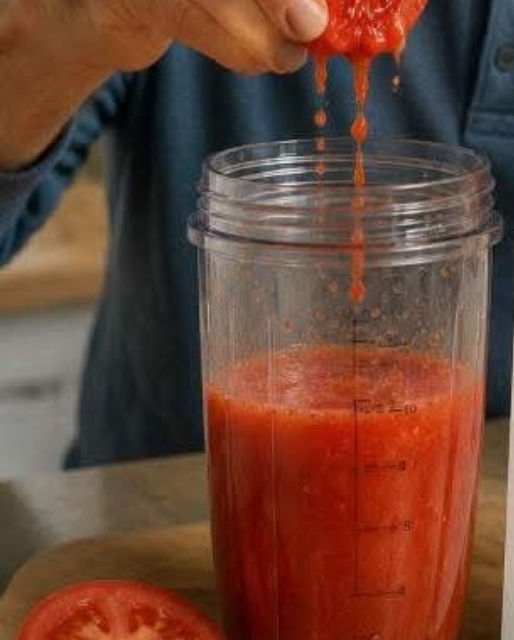
Drink This Tomato-Ginger Blend to Flush Stiffness, Fatigue, and Bad Circulation
The tomato’s red juice and ginger’s sharp bite do something most morning drinks never do: they hit your bloodstream like a tiny cleanup crew. That ruby pulp is loaded with lycopene, and the ginger slices carry fire-smothering compounds that push hot, oxygen-rich circulation into sluggish tissue.
Blend them with carrot and orange, and you’re not making “juice.” You’re breaking open plant walls the way a hammer cracks a locked crate, releasing raw biological fuel your body can actually use. That bright, peppery smell rising from the blender is the first clue this is not a weak little health drink.
And that matters, because the people who wake up with creaky joints, heavy legs, and a brain wrapped in morning fog are usually told to eat “better” without ever being shown why their body feels stuck in the first place. The system loves selling complicated fixes; it barely whispers about a four-ingredient kitchen blend that can hit blood flow, cholesterol, and stiffness at the same time.
Tomato and ginger are only the opening move. The real shift happens when the blend starts changing how your cells receive what they’ve been starving for.
The Red Flush That Opens Crowded Bloodways
Inside this blend, lycopene acts like a rust-stripping agent moving through narrow pipes lined with grime. When blood vessels are under daily stress, they don’t move like smooth lanes on a highway; they start acting like clogged side streets during rush hour.
That’s why the first thing people notice is not some dramatic miracle. It’s the quiet disappearance of that heavy, dragged-down feeling in the body — the kind that makes stairs feel steeper than they should and mornings feel like they start at half power.
Raw tomato alone can be stubborn, though. Its cell walls lock the good stuff inside like a warehouse with the doors welded shut, and that’s where the blender changes everything.
The blades smash those walls, the lycopene spills free, and suddenly your body gets access to the compound it was being denied. But that’s not even the whole story, because the orange and carrot are doing something the tomato can’t do on its own.