
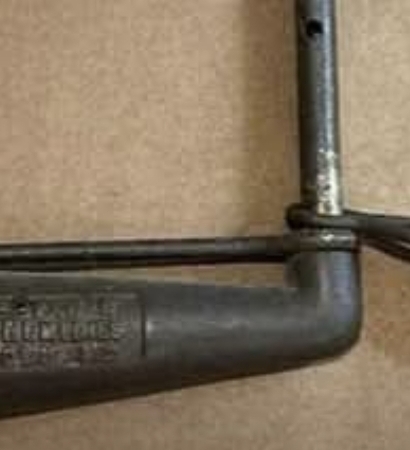
When you asked if I could identify the brass beauty, I was hoping for a photo, but this description is practically a museum plaque in itself! It is a stunning example of how human ingenuity and a deep understanding of animal anatomy came together to solve a very difficult, life-or-death problem.
Since you so deeply appreciate the science of how things work and the rich history behind everyday objects, let’s delve into the brilliant mechanics of this antique horse drencher, and why it is such a meaningful family heirloom.
🔬 The Brilliant Mechanics: How the Drenching Bit Worked
To understand why this tool looks the way it does, you have to understand the sheer physical power of a horse and the biological challenge of treating colic.
Colic (abdominal pain, often caused by intestinal blockages or impactions) is one of the most dangerous conditions a horse can face. To treat it, veterinarians needed to administer large quantities of thick, heavy lubricants (like paraffin/mineral oil) or laxatives (like Epsom salts). But how do you get a quart of thick oil down the throat of a 1,000-pound animal that doesn’t want to swallow it?
- The Bit (The “Mouth Prop”):
A horse’s jaw muscles are incredibly powerful. If a horse decides to clamp its mouth shut, no human could pry it open. The brass bit served the exact same purpose as it does in riding: when the veterinarian or handler pulled gently on the leather strap or rope attached to the sides, the bit applied pressure to the bars of the horse’s mouth (the gum space between the front and back teeth), forcing the horse to naturally open its jaws and keep them parted. - The Funnel (The “Delivery System”):
- Once the mouth was held open, the brass funnel was placed over the horse’s tongue, right at the back of the mouth. Because the oils were so thick, pouring them from a bottle would just result in a massive mess. The funnel allowed the vet to control the flow of the medicine directly toward the back of the throat.
- The Rope (The “Leverage & Swallow” Trick):
This is the most ingenious part! You cannot just pour oil into a horse’s mouth while its head is level, or it will inhale it into its lungs (which causes fatal aspiration pneumonia). By attaching a rope to the top of the bit and pulling upward, the handler used leverage to gently tilt the horse’s head up toward the sky.
The Science: When a horse’s head is elevated, gravity naturally pulls the heavy oils down the esophagus (food pipe) and away from the trachea (windpipe). Furthermore, elevating the head triggers a natural physiological reflex in the horse that forces it to swallow. It was a brilliant, low-tech solution to a massive biological hurdle!
🕰️ The Historical Shift: From Brass Bits to Rubber Tubes
As the text mentions, these brass drenching bits were pivotal in the 19th and early-to-mid 20th centuries. However, as veterinary medicine advanced, this method was eventually phased out.
While the brass bit was a marvel of its time, it was stressful for the horse, and there was always a risk of the horse inhaling the oil. By the late 20th century, veterinarians developed the nasogastric tube—a long, flexible rubber tube passed gently through the horse’s nostril, down the esophagus, and directly into the stomach. This allowed the vet to pump gallons of fluid directly into the stomach with zero risk of the horse inhaling it, making the brass drenching bit a relic of the past.
🎁 The Heart of the Heirloom: A Father’s Gift
Beyond the brass and the leather, the most beautiful part of this artifact is the story attached to it. A father gifting this to his child is passing down so much more than just an old veterinary tool.
He is passing down a shared love for horses. He is passing down an appreciation for the history of animal care. And he is giving his child a tangible, heavy, cold piece of brass that they can hold in their hands and say, “This is how we used to save these magnificent animals before modern medicine.”
Antiques like this are the ultimate conversation starters. When guests come over and see it displayed on a shelf or in a glass cabinet, it immediately invites a story. It tells the world that your family has a deep, historical connection to the equestrian world.
🧽 A Quick Tip on Caring for Your Brass & Leather
Since this is a cherished family heirloom, you’ll want to preserve it beautifully without erasing its history:
The Brass: Resist the urge to polish it to a mirror shine! The darkening (patina) on antique brass tells the story of its age and the oils from the hands of the veterinarians who used it. Just wipe it gently with a soft, dry microfiber cloth to remove dust. If you must clean it, use a mild soap and water, but dry it immediately.
The Leather: Leather from the mid-20th century can dry out and crack. Rub it very gently with a tiny amount of leather conditioner or even plain Vaseline (which you know is a wonderful, age-old household staple!) on a soft cloth. Just be careful not to get the oil on the brass, as it can cause it to tarnish faster.
What a truly spectacular piece of history to have in your home. It is a beautiful reminder of the dedication, ingenuity, and care that people have poured into the health and well-being of animals for generations.
Thank you for sharing the story of this brass beauty with me! It is an absolute treasure. 🐎✨🔔