
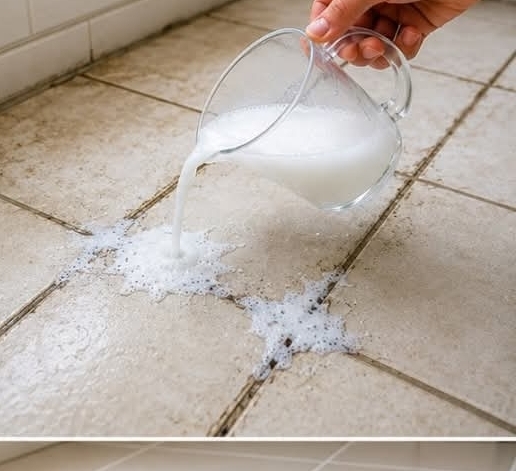
Tile floors can continue looking attractive for years, but the grout lines between the tiles often show wear much sooner. Because grout is naturally porous, it can trap dirt, grease, soap residue, and moisture over time, causing light-colored grout to gradually become gray, brown, or darker than the surrounding tile.
In kitchens, cooking oils and food particles can settle into grout lines. Bathrooms often experience moisture buildup that encourages mildew growth, while entryways collect dirt and debris tracked in from outside. Even routine mopping may not fully remove embedded grime and can sometimes spread it across the floor if the water becomes dirty.
Fortunately, heavily stained grout doesn’t always require replacement. With patience, proper cleaning techniques, and a few common household supplies, it’s often possible to restore much of its original appearance.
What You’ll Need
Many grout-cleaning jobs can be completed using basic household supplies.
Warm water
Baking soda
White vinegar*
Mild dish soap
Hydrogen peroxide for stubborn stains
Small stiff nylon brush or old toothbrush
Microfiber cloths
Bucket
Spray bottle
Rubber gloves
*Avoid using vinegar on natural stone surfaces such as marble, limestone, travertine, or slate, as acidic cleaners may damage these materials.
Step 1: Remove Loose Dirt
Start by thoroughly sweeping or vacuuming the entire floor.
Removing loose dust, sand, and debris first helps prevent scratching during cleaning and allows the cleaning solution to work directly on the stained grout.
Pay extra attention to corners, edges, and areas around baseboards where dirt commonly accumulates.
Step 2: Prepare a Gentle Cleaning Paste
Mix baking soda with a small amount of water until it forms a thick paste.
Apply the paste directly onto the grout lines, making sure they are completely covered.
Allow it to sit for several minutes before scrubbing so it can begin loosening embedded dirt.
For greasy kitchen grout, adding a few drops of mild dish soap to the mixture may help break down oily residue.
Step 3: Scrub the Grout
Using a stiff nylon brush or an old toothbrush, scrub along each grout line using short back-and-forth motions.
Work in small sections rather than cleaning the entire floor at once. This makes rinsing easier and prevents the cleaning mixture from drying on the surface.
Avoid excessive force, especially if the grout is old or beginning to deteriorate.
Some stains require a little extra attention. The next steps explain how to safely tackle stubborn discoloration and keep grout cleaner for much longer.
Step 4: Rinse Thoroughly
Once you’ve loosened the dirt, wipe the area with a damp microfiber cloth or rinse with clean water.
Change the rinse water frequently to avoid redistributing dirt across the floor.
After rinsing, dry the cleaned area with a clean towel or microfiber cloth.
Dry grout makes it much easier to identify any remaining stained areas that may benefit from another round of cleaning.
Step 5: Address Stubborn Stains
Some grout stains may have developed over many months or years and may not disappear after a single cleaning.
For persistent discoloration, hydrogen peroxide or other grout-safe cleaners may help improve the appearance. Always test any stronger cleaning solution in a small, inconspicuous area first to ensure it will not damage the grout or tile finish.
Several gentle cleaning sessions are generally safer than using highly aggressive methods that could damage the grout.
How to Help Prevent Future Grout Stains
Once your grout is clean, regular maintenance can help preserve its appearance.
Sweep or vacuum frequently.
Mop using clean water and replace dirty water as needed.
Dry bathroom floors after showers.
Clean spills promptly.
Improve ventilation in damp areas.
Place entry mats at exterior doors to reduce tracked-in dirt.
Some homeowners also apply a grout sealer after cleaning. Sealers can help reduce moisture absorption and make future cleaning easier, although they usually require periodic reapplication according to the manufacturer’s recommendations.
Common Cleaning Mistakes to Avoid
Using abrasive metal brushes that can damage grout or scratch tile.
Leaving cleaning products on the surface longer than directed.
Mixing household cleaning products without confirming they are compatible.
Skipping the rinsing step after scrubbing.
Mopping with dirty water that redistributes grime.
Taking a careful, methodical approach often produces better long-term results than using harsher cleaning methods.
Final Thoughts
Fresh, clean grout can dramatically improve the appearance of tiled floors without replacing a single tile. Bright grout lines make kitchens, bathrooms, laundry rooms, and entryways look cleaner and more inviting.
With regular maintenance, prompt attention to spills, and occasional deep cleaning, you can help keep grout looking its best and extend the attractive appearance of your tile floors for years to come.