
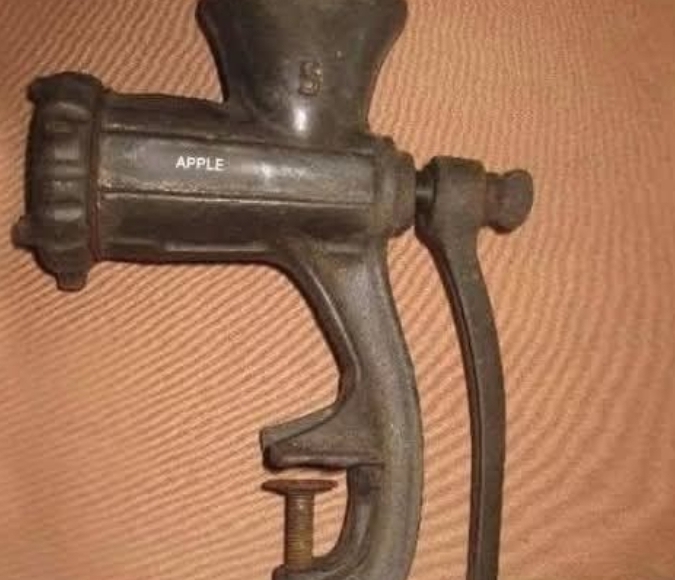
If you came across this heavy metal device in an old kitchen today, you might mistake it for a piece of workshop equipment.
But for generations of home cooks, this simple machine was an essential kitchen companion.
It is a traditional manual meat grinder, also known as a hand-crank meat grinder or manual meat mincer.
Before electric meat grinders, food processors, and conveniently packaged ground meat became commonplace, families relied on these sturdy machines to prepare food from scratch. The grinder could turn chunks of beef, pork, chicken, vegetables, bread, nuts, and even cooked leftovers into useful ingredients for countless recipes.
Its design was simple, but extremely practical. A heavy metal body was attached to the edge of a sturdy table with a clamp. Food was placed into the hopper at the top, and turning the wooden-handled crank rotated an internal screw. That screw pushed the food toward a sharp blade and a perforated grinding plate.
Within seconds, the food emerged from the front in a finely or coarsely ground form. There was no complicated control panel, motor, or collection of electronic settings. The cook controlled the process directly by turning the crank and choosing the appropriate grinding plate.
For many households, this was not an old-fashioned curiosity. It was an everyday kitchen tool.
What Was This Hand-Crank Machine Actually Used For?
The primary purpose of the device was to grind meat at home.
Instead of buying pre-ground meat, families could purchase larger cuts and decide exactly what went into their ground mixture. The grinder made it possible to process meat at home and prepare it in a form suitable for many familiar dishes.
This gave home cooks control over:
The type of meat
The amount of fat
The texture
The freshness
The seasoning
The size of the grind
That flexibility made a manual meat grinder especially valuable in homes where cooking from scratch was part of everyday life. The cook could decide whether the finished mixture should have a more substantial, coarse texture or a smoother, finer consistency.
It was also a useful way to make sure that smaller pieces, trimmings, and leftovers did not simply go to waste. Pieces that might otherwise have been difficult to serve could be transformed into ingredients for another meal.
How a Traditional Meat Grinder Works
The mechanism is surprisingly similar to the design used in many modern meat grinders.
The machine typically contains several important parts:
A heavy cast-iron or metal body
A top hopper where food is added
A hand crank
A wooden or metal handle
A spiral auger or screw
A rotating cutting blade
A perforated grinding plate
A threaded retaining ring
A table clamp
Once the grinder is secured to a sturdy surface, pieces of food are placed into the hopper. The food moves downward into the grinding mechanism as the crank is turned.
Turning the crank rotates the internal auger. The auger pushes the food forward toward the blade, creating a steady movement through the machine.
The rotating blade cuts the food against the perforated plate, forcing the pieces through the holes. The size and shape of those openings determine the texture of the finished mixture.
The result is a consistent ground mixture that can immediately be used in cooking. The process is straightforward, but the individual components work together efficiently, which is one reason these machines remained useful for so many years.
The Grinding Plate Controls the Texture
One of the cleverest features of these old kitchen grinders is the interchangeable grinding plate.
The size of the holes determines how coarse or fine the finished food will be. A plate with larger openings produces a coarse grind, while a plate with smaller openings produces a finer grind.
Some households kept several grinding plates so they could choose the right texture for different recipes. Instead of being limited to one finished consistency, the cook could change the plate according to what was being prepared.
Coarse Grind
A larger-hole plate could be useful for:
Rustic sausage
Chili
Coarse hamburger
Meat fillings
Certain traditional stuffing mixtures
A coarse grind leaves the food with a more noticeable texture. This could be useful when the ground mixture was intended to remain substantial rather than becoming especially smooth.
Fine Grind
A smaller-hole plate was better suited to:
Meatballs
Meatloaf
Fine sausage mixtures
Pâté-style preparations
Certain dumpling fillings
A finer grind creates a more uniform mixture, making it particularly useful when a recipe benefits from smaller pieces being distributed throughout the finished preparation.
This simple interchangeable system made the grinder much more versatile than it initially appeared.
Why Did It Have to Be Clamped to the Table?
A hand-crank grinder needs stability.
When you turn the handle, considerable force is transferred through the machine. If the grinder were simply sitting on a countertop, it would slide or move around. That would make the grinding process awkward and much less controlled.
The metal clamp solved that problem.
The grinder was positioned at the edge of a sturdy table, and the screw beneath the clamp was tightened until the machine was firmly secured. Once properly attached, the body stayed in position while the crank was turned.
Some cooks placed a folded cloth, piece of leather, or protective pad beneath the clamp to prevent the metal from scratching or marking wooden furniture. It was a small practical detail that reflected the way these tools were designed to be used repeatedly in a busy household kitchen.
Why Home Ground Meat Was So Important
Today, most shoppers can simply pick up a package of ground beef or pork at the supermarket.
Earlier generations often did things differently.
Families could buy larger cuts of meat and process them at home. This allowed them to combine lean pieces with fattier cuts until they achieved the texture they wanted.
It also offered a practical way to use meat trimmings and leftovers.
In households where food was expensive and wasting ingredients was avoided, this was a major advantage. A manual grinder could take pieces that were less convenient to cook as whole cuts and turn them into something useful for another recipe.
There was also a satisfying sense of control in preparing the mixture yourself. The process began with the larger pieces and ended with an ingredient ready for the next stage of cooking.
Making Homemade Ground Beef
One of the most common uses was preparing fresh ground beef.
A larger piece of beef could be trimmed and cut into smaller chunks before being fed gradually into the grinder. The pieces moved through the hopper, down toward the auger, and through the blade and grinding plate.
The resulting ground beef could then be used immediately for burgers, meatballs, meatloaf, stuffed vegetables, sauces, and many other dishes.
Homemade Hamburgers
Freshly ground beef could be shaped into hamburger patties.
Because the cook controlled the meat mixture, they could adjust the fat content and grind size according to the recipe or personal preference. The grinding plate could also influence the texture of the meat before it was shaped into patties.
For a household accustomed to preparing food from larger cuts, grinding the meat was simply another part of the cooking process.
Classic Meatballs
Manual grinders were also useful for preparing meatball mixtures.
Some traditional cooks would grind beef or pork together with ingredients such as onion, soaked bread, herbs, and other seasonings before mixing everything thoroughly.
The grinder helped create a base in which the ingredients could be incorporated into the meat mixture. Once everything was combined, the mixture could be shaped into individual meatballs for cooking.
Traditional Meatloaf
Ground meat from the grinder could be combined with breadcrumbs, egg, onion, herbs, salt, and spices to create a homemade meatloaf mixture.
The grinder helped turn larger cuts into the basic ingredient needed for this classic comfort food. For cooks accustomed to doing as much preparation as possible at home, grinding the meat was a natural part of assembling the dish.
For many families, sausage making was one of the most valuable functions of a manual meat grinder.
Pork, beef, or other meats could be ground and then combined with salt, herbs, spices, and other seasonings. The ability to control the grind gave the cook another way to influence the texture of the finished sausage mixture.
Some grinders included an additional sausage-stuffing attachment.
Once the meat mixture was prepared, it could be pushed through a stuffing tube and into sausage casings. This allowed families to prepare their own sausage rather than purchasing commercially prepared products.
The same sturdy machine that handled the grinding stage could therefore become part of a larger food-preparation routine. Its usefulness extended beyond simply reducing pieces of meat into smaller pieces.
Why Farmers and Rural Families Relied on These Grinders
In farming communities, processing meat at home was often an important part of seasonal food preparation.
After an animal was butchered, different portions could be roasted, cured, smoked, preserved, or ground.
The grinder provided a practical way to turn smaller cuts and trimmings into useful food. Instead of throwing away pieces that were difficult to cook as whole cuts, families could transform them into sausage, meatballs, fillings, patties, or other dishes.
Because the grinder was manually operated and mechanically simple, it could become a dependable part of the kitchen routine. Once clamped securely to a sturdy table, it was ready to perform the repetitive work of grinding without requiring an electrical motor.
More Than Just a Meat Grinder
Although the machine is commonly called a meat grinder, many models could process other foods as well.
Depending on the design and grinding plate, people sometimes used these machines for:
Cooked meat
Potatoes
Bread
Crackers
Nuts
Vegetables
Fish
Certain stuffing mixtures
This versatility made the grinder a valuable multipurpose kitchen appliance. Its usefulness was not limited to one particular type of food, and the same basic mechanism could be adapted to different preparation tasks.
Turning Leftovers Into a New Meal
Food waste was something many older households worked hard to avoid.
Leftover roast beef or other cooked meat could be passed through the grinder and transformed into another dish. Changing the texture gave cooks a way to use leftovers differently instead of simply serving the same preparation again.
Ground cooked meat could be used for:
Hash
Meat pies
Croquettes
Sandwich fillings
Stuffed pastries
Stuffed cabbage
Instead of serving the same leftovers again, cooks could change their texture and combine them with fresh ingredients to create an entirely different meal.
For a household trying to make careful use of every ingredient, that flexibility was important. The grinder could turn yesterday’s cooked meat into a workable component for today’s meal, giving leftovers a different purpose and presentation.
Grinding Dry Bread Into Breadcrumbs
Old-fashioned grinders could also help process dry bread.
Rather than throwing away stale bread, a household could grind it into crumbs. The same basic grinding action that reduced meat into smaller pieces could turn dry bread into a useful cooking ingredient.
Those breadcrumbs could then be used for:
Meatballs
Meatloaf
Stuffing
Food coatings
Other baked or fried dishes
This was another simple way to stretch household ingredients. Bread that was no longer especially appealing on its own could be given another purpose in the kitchen.
Processing Other Ingredients
The grinder’s usefulness also came from its ability to work with foods beyond the ingredients most people associate with it today.
Depending on the particular model and grinding plate, foods such as vegetables, potatoes, nuts, crackers, and certain other ingredients could be processed through the machine.
That meant the grinder could occupy a surprisingly important place in a kitchen. It was not merely a specialized device brought out for one annual task. For households that prepared many ingredients from scratch, it could be useful in several different stages of meal preparation.
The hand crank also gave the cook direct control over the process. Turning it steadily moved the ingredients through the auger, while the selected plate determined the resulting texture.
The Simplicity of the Design
Perhaps one of the most memorable things about these vintage grinders is how straightforward they were.
There was no complicated interface to learn. The cook secured the grinder to a sturdy table, placed the food into the hopper, and turned the handle.
Inside the metal housing, the auger moved the food toward the blade and grinding plate. The blade performed the cutting while the plate determined the size of the pieces that emerged.
Every part had a recognizable purpose. The clamp provided stability. The crank supplied the movement. The auger moved the food forward. The blade cut it. The plate shaped the final texture.
That practical design explains why the machines could remain useful for years in a household where cooking was done regularly and equipment was expected to serve a purpose rather than simply take up space.
Why These Grinders Feel So Different Today
Modern kitchens have made food preparation much faster and more convenient. Electric appliances can perform many tasks with the push of a button, while supermarkets offer ingredients that have already been prepared.
A hand-crank grinder belongs to a different style of cooking.
Using one requires the cook to participate in the process from beginning to end. Larger pieces are prepared, placed into the hopper, and pushed through the mechanism by the turning of the crank.
That extra involvement may seem unusual to someone accustomed to modern appliances, but it was once completely ordinary.
The grinder was simply another tool kept close at hand, ready whenever a household needed to prepare ground meat, process leftovers, make breadcrumbs, or work with other suitable ingredients.
The traditional manual meat grinder represents a very practical approach to cooking.
Its value did not come from elaborate features. Instead, it came from doing a specific job reliably and allowing the cook to adapt that job to different foods and recipes.
The interchangeable plates provided control over texture. The clamp kept the machine stable. The hand crank supplied the necessary movement, and the internal auger, blade, and plate worked together to transform the ingredients.
For families who regularly cooked from larger cuts, prepared sausage, reused leftovers, or made breadcrumbs from dry bread, that combination of simplicity and versatility made the grinder worth keeping.
The Sound of the Old Kitchen
Anyone who has seen one of these grinders used can probably imagine the distinctive rhythm of the process: the crank turning steadily, the auger moving inside the metal body, and the prepared food emerging from the front of the machine.
It was physical work, but it was also predictable work. Once the grinder was secured properly, the cook could continue turning the handle while gradually adding the prepared food.
In a busy household kitchen, that kind of repetitive preparation was simply part of making a meal.
Why the Tool Became a Vintage Curiosity
As electric meat grinders, food processors, and commercially prepared ground foods became more common, the need for a manually operated grinder declined in many kitchens.
What had once been an ordinary household appliance gradually became something people encountered in older kitchens, family collections, antique shops, or photographs of kitchens from earlier generations.
To younger generations, the heavy metal construction and table clamp can make the device look more like workshop equipment than something intended for preparing dinner.
Yet the design makes sense once its purpose is understood. Every visible component exists to solve a practical problem: holding the machine steady, moving the food, cutting it, and controlling the texture.
A Reminder of How Food Was Prepared
The vintage hand-crank meat grinder is more than an unusual kitchen object. It is a reminder of how much food preparation once happened directly inside the home.
Families did not always begin with neatly packaged ingredients. Larger cuts of meat could be transformed into ground meat. Dry bread could become breadcrumbs. Leftover cooked meat could be processed and incorporated into another meal.
The grinder provided the mechanical help needed to make those transformations possible.
It also reflected a practical attitude toward food: use what you have, prepare ingredients yourself, and avoid letting useful food go to waste.
From Everyday Appliance to Vintage Kitchen Treasure
Today, a heavy hand-crank grinder may sit unused in an old kitchen or appear as an intriguing piece of vintage equipment. Its appearance can make it difficult to imagine that families once relied on it for ordinary meal preparation.
But once you understand the mechanism, its importance becomes much clearer.
The machine could grind meat, control texture through interchangeable plates, assist with sausage making, process suitable leftovers, and turn dry bread into breadcrumbs. Its sturdy body and simple moving parts were designed around function rather than appearance.
For generations of home cooks, that was enough.
The manual meat grinder was not designed to impress. It was designed to work.
What Makes the Old Design So Memorable?
Perhaps the most fascinating part of the traditional grinder is how little was required to accomplish so much. A sturdy table, a secure clamp, the grinder itself, and a person willing to turn the handle were enough to transform a variety of ingredients.
There was no need for a complicated setup. Once the machine was firmly attached, the basic process was easy to understand.
That direct connection between the cook and the tool is one reason vintage kitchen equipment can be so fascinating today. The grinder shows exactly how the work was done rather than hiding the process behind a motor or electronic controls.
The Vintage Tool Younger Generations May Never Recognize
For someone who has only known electric appliances and supermarket packages of prepared ingredients, a hand-crank meat grinder can look almost mysterious.
Its heavy metal body, wooden handle, table clamp, hopper, and collection of removable parts belong to another era of home cooking. Yet there was nothing mysterious about its purpose.
It was a dependable machine for turning larger pieces of food into useful ingredients.
Whether it was used for ground beef, meatballs, meatloaf, sausage, leftover meat, breadcrumbs, or other suitable foods, the grinder earned its place by being useful.
That is ultimately why this vintage kitchen tool deserves to be remembered. It represents a time when a household’s cooking equipment was often simple, durable, and expected to perform many practical tasks.
What might look like an old piece of workshop machinery was, for generations of cooks, simply part of the kitchen.