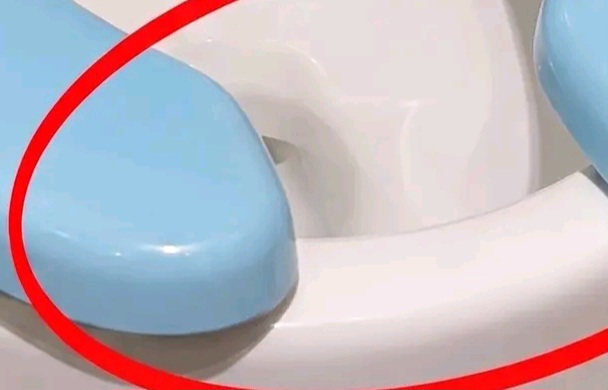
Oh, what a wonderfully ordinary question with a surprisingly interesting answer!You know, I was in the library the other day and, as I walked into the restroom, I noticed one of those familiar U-shaped toilet seats. I stopped for a moment and thought, My goodness, why IS it designed that way?At 73, I’ve certainly used my fair share of public restrooms—from gas stations during road trips to department stores and restaurants—and that open-front toilet seat seems to be everywhere.But most of us never stop to ask why.Well, grab your favorite mug of tea, because that little gap at the front of a toilet seat isn’t just a quirky design choice. There’s actually some practical reasoning behind it!What Is a U-Shaped Toilet Seat?A U-shaped toilet seat, also called an open-front toilet seat, has a gap at the front instead of forming a complete oval.You’ll often see this design in public restrooms, particularly in commercial buildings, restaurants, schools, offices, and other high-traffic facilities.The opening may look unusual at first, especially if you’re accustomed to the fully enclosed seats commonly found in homes.But that little opening serves several practical purposes.Why Do Public Toilets Have U-Shaped Seats?There isn’t just one reason.The open-front design is associated with hygiene, accessibility, cleaning, maintenance, and plumbing-code requirements in some jurisdictions.Let’s take a closer look.1. Plumbing and Building CodesHere’s the part that surprises many people: open-front toilet seats are required or specified in some public restroom applications by plumbing or building codes, particularly in parts of the United States.For example, versions of U.S. plumbing codes have included provisions concerning open-front toilet seats in public facilities.However, it’s important not to assume that every public restroom everywhere is legally required to have one. Requirements can vary by jurisdiction, building type, and the edition of the applicable code.So if you’ve ever wondered why you see the same basic design in restroom after restroom, regulations and commercial restroom standards are part of the story.2. Hygiene2. HygieneThis is probably the explanation most people expect.The open-front design creates a little more separation at the front of the seat, which can help reduce unnecessary contact with the seat in that area.It’s not a magical germ-proof design—nothing about a toilet seat makes a restroom germ-free—but the shape is intended to support more hygienic use in busy public facilities.And let’s be honest: in a restroom used by hundreds of people every day, thoughtful design matters!Less Contact at the FrontThe opening means the seat doesn’t form a continuous surface around the front of the toilet.That can reduce some opportunities for contact between the user’s body and the front portion of the seat.Easier CleaningA simpler open-front shape can also make certain areas of the seat easier for custodial staff to wipe and inspect.Public restrooms need to be cleaned frequently, and designs that make routine maintenance easier can be valuable.Better Access for CleaningThat open space at the front provides easier access around the bowl and seat, which can be helpful when staff are wiping down the fixture.It’s one of those tiny design choices that makes more sense when you think about the people responsible for cleaning dozens of toilets every day!3. Easier MaintenancePublic restrooms experience a tremendous amount of wear and tear.Toilet seats are repeatedly used, cleaned, disinfected, and sometimes subjected to considerably more abuse than a residential toilet.An open-front seat is relatively simple in construction and leaves fewer materials and surfaces at the very front of the seat.That straightforward design can make routine cleaning and inspection easier.And when something does eventually need replacing, commercial toilet seats are generally designed with durability and maintenance in mind.4. Accessibility and User ComfortThere’s another practical consideration: the open-front shape can provide additional clearance at the front of the seat.This can be helpful for some users and can make personal hygiene easier.The design is particularly associated with commercial and institutional restroom environments, where fixtures need to accommodate a wide variety of users.Of course, a U-shaped seat isn’t automatically more comfortable for everyone. Comfort depends on the individual, the seat dimensions, and the toilet itself.Is the U-Shaped Design Actually More Hygienic?It can offer some hygiene and maintenance advantages, but it isn’t a guarantee of cleanliness.This distinction is important.A toilet seat—whether round, elongated, U-shaped, or fully closed—can still become contaminated if a restroom isn’t cleaned properly.The U-shape doesn’t somehow prevent bacteria and viruses from existing in the restroom.Instead, the open-front design is one small part of a broader approach to public restroom hygiene and maintenance.Regular cleaning, proper handwashing, functioning plumbing, good ventilation, and well-maintained fixtures all matter much more than the shape of the seat alone.Why Don’t Most Home Toilets Have U-Shaped Seats?Now here’s something you may have noticed.You can walk into a public restroom and see U-shaped seats everywhere, then go home and find a completely closed toilet seat.Why the difference?Homes generally aren’t subject to the same commercial restroom design considerations, and homeowners can choose whichever seat shape they prefer.Closed-front seats are popular in residential bathrooms because many people find them comfortable and aesthetically pleasing.There’s also no need for a private household bathroom to accommodate the same constant stream of users as a busy public facility.So the difference often comes down to purpose and setting.Are U-Shaped Toilet Seats Required Everywhere?No.This is an important point because you’ll sometimes see the claim that all public restrooms are legally required to have U-shaped seats.That’s too broad.Building and plumbing requirements vary depending on where you live and which codes have been adopted by the local authority.Some jurisdictions or facility types may require or specify open-front seats, while others may not.That’s why you can occasionally encounter a closed-front seat in a public restroom without anyone necessarily breaking a universal rule.Why Are They So Common in Public Restrooms?When you put all the factors together, the popularity of the U-shaped seat starts to make perfect sense.Public restrooms need fixtures that are:Easy to cleanDurablePracticalAccessibleSuitable for frequent useCompatible with applicable codes and standardsRelatively simple to maintainThe open-front toilet seat checks several of those boxes.It’s not particularly glamorous, but it’s a clever example of everyday design solving several little problems at once.Other Interesting Public Restroom Design FeaturesOnce you start paying attention, you’ll realize public bathrooms are full of clever little details.Automatic FaucetsTouchless faucets reduce the need to touch handles after washing your hands.Automatic Flush ValvesThese can help reduce the number of surfaces users need to touch and can ensure toilets are flushed between uses.Sensor-Operated Soap DispensersAnother small convenience that can reduce unnecessary contact.Hand Dryers and Paper TowelsThese aren’t merely conveniences. Proper hand drying is an important part of effective hand hygiene.Stall GapsThose infamous gaps around restroom stall doors and partitions are another design choice with practical reasons behind them, including visibility, ventilation, cleaning, and emergency access.Of course, whether you like those gaps is another question entirely!Frequently Asked QuestionsWhy is there a gap in public toilet seats?The gap creates an open-front design that can provide hygiene, cleaning, maintenance, and accessibility advantages. In some U.S. public restroom settings, open-front seats are also addressed by plumbing codes.Are U-shaped toilet seats cleaner?Not necessarily. Their design may make certain aspects of cleaning and use more practical, but a U-shaped seat still needs regular cleaning and disinfection.Are U-shaped toilet seats required by law?In some jurisdictions and public facilities, applicable plumbing or building codes may require or specify open-front seats. There is not one universal requirement that applies to every public restroom everywhere.Why don’t residential toilets usually have U-shaped seats?Homeowners aren’t generally dealing with the same commercial restroom requirements and usage levels, so closed-front seats are perfectly common in residential bathrooms.Is it safer to sit on a U-shaped toilet seat?The U-shape itself doesn’t make a toilet seat completely safe from germs. Good restroom hygiene and proper handwashing are much more important.What is an open-front toilet seat?It’s a toilet seat with an opening at the front, creating the familiar U shape. The terms U-shaped toilet seat and open-front toilet seat are commonly used for this style.The Bottom LineSo, the next time you walk into a public restroom and see that familiar U-shaped toilet seat, you’ll know there’s more to it than meets the eye.That little opening is part of a practical design intended to support hygiene, cleaning, maintenance, accessibility, and—depending on the location—compliance with public restroom codes.It’s funny how many everyday objects we see hundreds of times without ever wondering why they’re designed the way they are.And sometimes, the answer is surprisingly fascinating!So go ahead and notice the little things. The next time you see that U-shaped seat, you can smile and think, Well, now I know why that’s there!Did You Know?If this little bit of everyday design trivia surprised you, share it with a friend who loves discovering the hidden reasons behind ordinary things.And if you have a public-restroom mystery of your own, leave a comment. I’d love to hear what everyday object you’ve always wondered about!
Have You Ever Wondered Why Public Restrooms Have U-Shaped Toilets?