
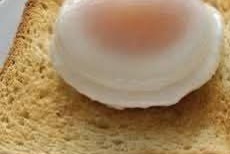
Poached eggs—silky, runny yolks wrapped in tender, cloud-like whites—are the crown jewel of brunch. But too often, they turn into wispy, broken messes that scatter in the water like egg confetti.
Good news: you don’t need vinegar, a whirlpool, or a culinary degree to nail them. The secret lies in fresh eggs, gentle heat, and a clever straining trick that guarantees compact, restaurant-quality poached eggs—every single time.
 Why This Method Works
Most poached egg fails happen because:
- Old eggs = watery whites that drift apart
- Boiling water = turbulence that shreds the egg
- No prep = excess watery albumen clouds the water
This method solves all three—with zero vinegar, no swirling, and minimal cleanup.
What You’ll Need
- 1–2 very fresh eggs (farm-fresh is ideal—whites are tighter)
- A fine-mesh strainer
- A small bowl or ramekin
- A saucepan
- Water
- Slotted spoon
Step-by-Step Instructions (The Strainer Method)
1. Strain the Egg (The Game-Changer!)
- Crack a cold egg into a fine-mesh strainer over a bowl.
- Let the watery, loose white drain away for 10–15 seconds—keep only the thick white and yolk.
- Gently slide the egg into a small bowl or ramekin (this makes pouring easy).
Why this works: Removing the thin albumen prevents feathering—your egg stays neat and round.
2. Heat the Water—Gentle is Key
- Fill a saucepan with 3–4 inches of water.
- Heat over medium heat until it reaches a bare simmer—tiny bubbles at the bottom, no rolling boil (180–190°F / 82–88°C).
- No vinegar needed—fresh eggs + gentle heat = clean poach.
3. Slide, Don’t Drop
- Gently pour the strained egg from the ramekin into the water.
- Do not stir or swirl—let it cook undisturbed.
4. Cook to Perfection
- Soft poach: 3 minutes (runny yolk, tender white)
- Firmer: 4 minutes (jammy yolk)
- You’ll see the white turn opaque and the edges curl softly.
5. Remove with Care
- Lift the egg out with a slotted spoon.
- Gently blot the bottom on a paper towel to remove excess water.
- Season with flaky salt and cracked pepper.
Pro Tips for Success
- Use the freshest eggs possible—they hold together best.
- Poach one at a time for perfect shape (or use a wide pan for 2).
- Keep water at a bare simmer—bubbles should barely break the surface.
- Make ahead: Poach eggs, plunge into ice water, then reheat in warm water for 1 minute before serving.
Serving Ideas
 On avocado toast with chili flakes
 Over grilled asparagus or roasted tomatoes
 On a bacon-cheddar English muffin (breakfast sandwich!)
 With hollandaise for DIY eggs Benedict
 What NOT to Do
- Don’t use old eggs—they’ll feather instantly.
- Don’t boil the water—it tears the egg apart.
- Don’t skip straining—it’s the secret to clean, compact eggs.
- Don’t add vinegar unless you like a faint tang—it’s unnecessary with fresh eggs.
 The Bottom Line
Perfect poached eggs aren’t about fancy tools—they’re about freshness, patience, and a fine-mesh strainer. Once you try this method, you’ll never go back to chaotic, wispy eggs again.
So grab your strainer, heat that water gently, and get ready for silky, soul-satisfying poached eggs—no stress, no mess, just perfection.