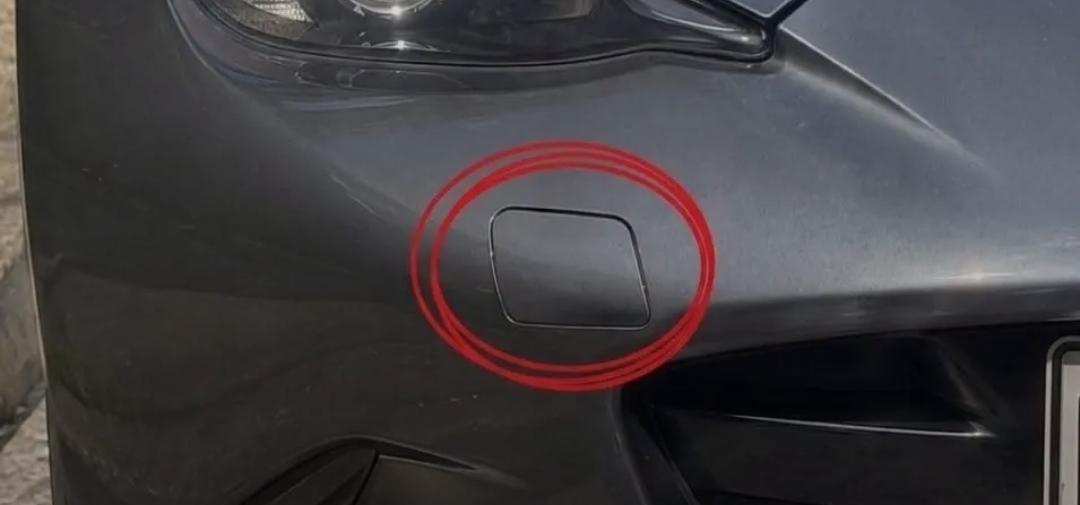
ave you ever noticed a small square or rectangular panel on the front or rear bumper of a car and wondered what it was for?It may look like an insignificant piece of trim, but on many vehicles, that little panel covers an important feature: the mounting point for a removable towing eye or recovery hook.The threaded end screws into the mounting point behind the bumper cover.The loop is then used as the designated attachment point.It isn’t exactly the sort of thing you expect to find tuckedaway in your trunk, which is probably why so many drivers have no idea what it is!How to Find Your Car’s Tow HookIf you’re curious about your own vehicle, don’t start prying random panels off the bumper.Instead, check the owner’s manual first.Look for sections labeled:TowingVehicle recoveryEmergency towingTowing eyeRecovery pointsEmergency equipmentSomevehicles also have the information printed on a diagram inside the emergency-toolcompartment.How to Access the Tow HookThe exact procedure varies between vehicles, but the general process looks something like this:Step 1: Locate the Towing EyeCheck the trunk, cargo area, spare-tire compartment, or emergency-tool storage area.Don’t assume every vehicle includes one in the same location.Step 2: Find the Correct Bumper CoverUse the owner’s manual to identify the designated tow-hook cover.It may be located on the front or rear bumper.Step 3: Remove the Cover CarefullyThe cover is usually designed to be removed witha suitable tool or by using a designated access point.Some covers pop out, while others have a specific removal method.Don’t force it.If the panel doesn’t release easily, stop and check the instructions. Breaking a painted bumper cover is a frustrating way to turn asimple recovery feature into a repair bill.Step 4: Install the Towing EyeScrew the towing eye into the threaded socket as directed by the manufacturer.It needs to be properly seated and secured before any recovery equipment is attached.Step 5: Letthe Recovery Professional Handle the PullThis is especially important if the vehicle is stuck or damaged.A tow point isn’t a magic invitation to yank the car in whatever direction seems convenient.The recovery method needs to account for the vehicle’s weight, drivetrain, wheels, terrain, and overall condition.Important: Don’t Use the Tow Hook for EverythingHere’s something worth remembering: a towing eye is not necessarily designed for aggressive off-road recovery or every type of pulling operation.There is a big difference between towing a disabled vehicle and snatchinga deeply stuck vehicle out of mud with a recovery strap.The forces involved in a hardrecovery can be dramatically higher than those involved in ordinary towing.Always follow the manufacturer’s instructions regarding towing direction, equipment, weight limits, and recovery procedures.And if you’re unsure, call a professional recovery service.What About Track Cars?You’ve probably seen performance cars with bright red, yellow, or orange tow straps and hooks sticking out of the bumper.Those aren’t just there for dramatic photographs!On a racetrack, vehicles can spin off thecourse, become disabled, or need to be removed quickly after an incident.Track organizers often require vehicles to have clearly accessible recovery points so marshals can move them efficiently.Some purpose-built track cars have permanently installed tow straps or hooks, while other vehicles may use factory towing points hidden behind bumper covers.The principle is the same: give recovery crews a designated place to safely move the vehicle.Why the Little Panel Is Actually a GreatDesign DetailThe clever part isn’t really the panel itself.It’s what the panel← Previous Pagerepresents.When you’re driving normally, there’s no reason to have a large metal towing hook sticking out of your bumper.But if something goes wrong, you may suddenly need exactly that feature.The hidden design gives you the best of both worlds:A clean appearance when you don’t need it.A functional recovery point when you do.That’s a pretty good example of practical engineering hiding in plain sight.What If You Can’t Find One on Your Car?Don’t panic.Not every vehicle uses the same system.Some vehicles havevisible recovery points. Some have removable covers. Others may have towing points in different locations.And some vehicles have very specific procedures for transporting or recovering them.If you can’t find a towing eye or cover, consult your owner’s manual rather than guessing.A few minutes spent checking the correct procedure could save you from damaging the car.Common Mistakes to AvoidDon’t Pull From a Random Bumper ComponentThe bumper isn’t automatically a suitable recovery point just because it’s strong enough to withstand everyday driving.Use the designated attachmentpoint.Don’t Force the Cover OffPainted trim pieces can crack, scratch, or break if they’re pried incorrectly.Follow the manufacturer’s instructions.Don’t Assume Every Tow Point Works the Same WayFront and rear points can have different instructions, and the correct towing procedure varies between vehicles.Don’t Attempt a High-Force Recovery Without the Right EquipmentIf your car is buried in mud or snow, repeatedly flooring another vehicle to yank it free can create enormous forces.When in doubt, call a professional.Frequently Asked QuestionsWhat is the littlesquare on the front bumper of a car?It is usually acover for a threaded towing-eye mounting point. Behind it is a socket where a removable towing eye can be installed.Does every car have a tow-hook cover?No. Designs vary by manufacturer and vehicle. Some cars have visible towing points, while others use different types of covers or recovery systems.Where is the tow hook stored?It is commonly stored with the vehicle’s emergency equipment, such as in the trunk, cargo compartment, or spare-tire area. Check your owner’smanual for the exact location.Can I use the tow hook to pull my car out of mud?Not necessarily. The towing eye may be designed for towing or controlled vehicle recovery, but high-force extraction can place very large loads on the vehicle.Follow the manufacturer’s instructions and use appropriate professional recovery equipment when necessary.Can I remove the bumper panel myself?Usually, the cover is designed to be removable, but theexact procedure varies. Check your owner’s manual before attempting it.Why doesn’t my car have an exposed towhook?Many passenger vehicles hide the recovery point behind a removable cover to maintain a clean exterior design when the towing point isn’t needed.Is the tow hook the same as a trailer hitch?No. A tow hook or towing eye is generally intended for vehicle towing or recovery. A trailer hitch is designed for towing a trailer and uses a different mounting system and load requirements.The Next Time You See That Little Panel…Now you know.That tiny square on the bumper isn’t random trim, a mysterious sensor,or a secret compartment for snacks!It’s usually covering an important part of your vehicle’s recovery system.Most of the time, you’ll never need to touch it. Butif your car ever breaks down, gets stuck, or needs to be moved afteran accident, knowing what it is—and knowing where to find the correct towing equipment—can be incredibly useful.It’s one of those little automotive details that you can completely ignore for years…Until the day you suddenly really, really need it.And once you’ve learned what that little panelis hiding, you may start noticing it on almost every car you see!Final ThoughtsModern cars are full of tiny features that most drivers never think about.Some make the car more comfortable. Some improve safety. And some are there quietly waiting for the one situation when you desperately need them.That small bumper panel belongs in the last category.So the next time you walk past your car, take a look at the bumper. You might spot the little square hiding its towing point.Just remember: check yourowner’s manual before removing it or attaching any recovery equipment.Because knowingwhat a feature does is useful.Knowing how to use it correctly is even better.Did You Know About This?Have you ever noticed the little tow-hook cover on your car?Maybe you’ve actually had to use it—or perhaps you always wondered what it was hiding.Share your experience in the comments!And if this little automotive mystery surprised you, share it with someone else who might finally want to know what that mysterious square on their bumperowner’s manual before removing it or attaching any recovery equipment.Because knowing what a feature does is useful.Knowing how to use it correctly is even better.Did You Know About This?Have you ever noticed the little tow-hook cover on your car?Maybe you’ve actually had to use it—or perhaps you always wondered what it was hiding.Share your experience in the comments!And if this little automotive mystery surprisedyou, share it with someone else who might finally want to know what that mysterious square on their bumper
Small Panel on Bumper: Why It’s There