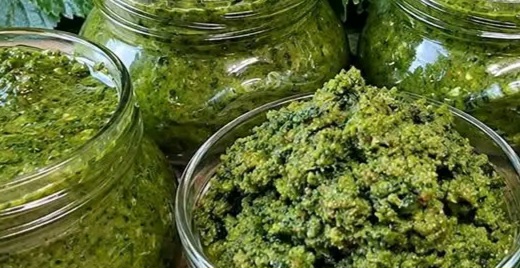
Mulberries are famous for their sweet, juicy berries, but the leaves of the mulberry tree have also been used traditionally in different cuisines and herbal preparations. Fresh, young leaves can be incorporated into recipes, while dried leaves are often prepared as a tea.One simple way to enjoy fresh mulberry leaves is to turn them into a flavorful green paste that can be used with bread, vegetables, pasta, rice, or as a condiment. The result is fresh, earthy, and surprisingly versatile.Homemade Mulberry Leaf Green PasteIngredients2 large handfuls of young, healthy mulberry leaves2–3 tablespoons extra-virgin olive oil1 small garlic clove2 tablespoons walnuts, almonds, or sunflower seeds1 tablespoon lemon juiceA small pinch of salt2–4 tablespoons water, as neededStep 1: Choose the LeavesSelect young, tender mulberry leaves from a tree that you know has not been treated with pesticides or other chemicals.Avoid leaves that are damaged, moldy, yellow, or covered with insects.Step 2: Wash ThoroughlySeparate the leaves from their stems and wash them carefully under cool running water.Place them in a bowl of clean water and rinse them again to remove dirt and debris.Pat the leaves dry with a clean towel.Step 3: Blanch the LeavesBecause raw leaves can be tough and have a slightly bitter flavor, blanching makes them softer and more pleasant to eat.Bring a pot of water to a boil and add the leaves for approximately 1–2 minutes.Immediately transfer them to cold water, then drain and gently squeeze out excess water.Step 4: Prepare the IngredientsRoughly chop the blanched leaves.Peel the garlic and prepare the nuts or seeds.Add everything to a food processor or blender.Step 5: BlendAdd the olive oil, lemon juice, salt, and a little water.Blend until the mixture becomes a smooth or slightly textured green paste.If it is too thick, add another tablespoon of water or olive oil.Step 6: Adjust the FlavorTaste the mixture and adjust the seasoning.For a brighter flavor, add a little more lemon juice. For a richer texture, add a little more olive oil or nuts.Step 7: Store ProperlyTransfer the finished paste into a clean, airtight container.Keep it refrigerated and use a clean spoon each time you serve it. Because this is a homemade fresh preparation without commercial preservatives, it is best made in small batches and consumed promptly.How to Use Mulberry Leaf PasteThere are many easy ways to enjoy it:Spread a small amount on toasted bread.Serve it alongside grilled vegetables.Mix it into pasta or rice.Use it as a flavorful sandwich spread.Add a spoonful to soups or vegetable dishes.Serve it with potatoes or roasted vegetables.Mix it with yogurt for a creamy dip.What About Mulberry Leaf Tea?Another traditional preparation is mulberry leaf tea. Clean, properly identified leaves can be dried and steeped in hot water, producing a mild herbal drink.However, mulberry leaves should not be presented as a treatment or cure for diabetes, high blood pressure, cholesterol, or other medical conditions. Research has investigated compounds in mulberry leaves, but that does not mean drinking the leaves can replace prescribed medication or medical treatment.If you take medication—particularly medication affecting blood sugar—speak with a healthcare professional before regularly consuming concentrated mulberry-leaf preparations.The beautiful thing about the mulberry tree is that the berries aren’t necessarily the only part that can inspire your kitchen. With properly identified, clean young leaves and a simple preparation, you can turn an often-overlooked ingredient into a fresh green condiment with a pleasant earthy flavor.
Everybody Loves Mulberries, But Few People Know What You Can Do With the Leaves