
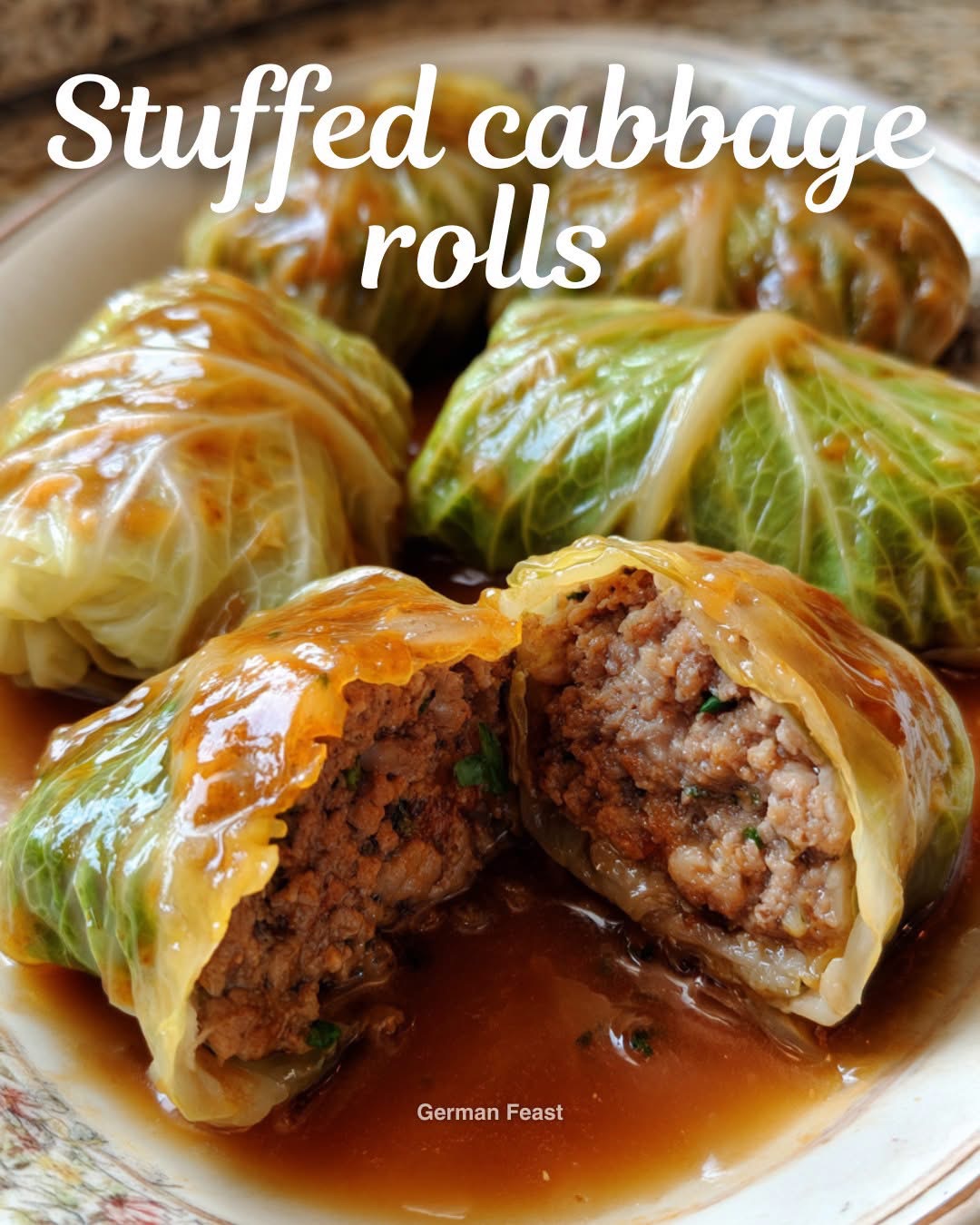
Let’s take a cozy stroll into the world of German comfort food—where cabbage leaves are wrapped around a ground beef filling, in a creamy bacon sauce. Sound dreamy? That’s exactly what you get with Kohlrouladen, also known as German stuffed cabbage rolls or Krautwickel.
Medium
35 minutes
45 minutes
1 hour 20 minutes
4 servings (8–10 rolls)
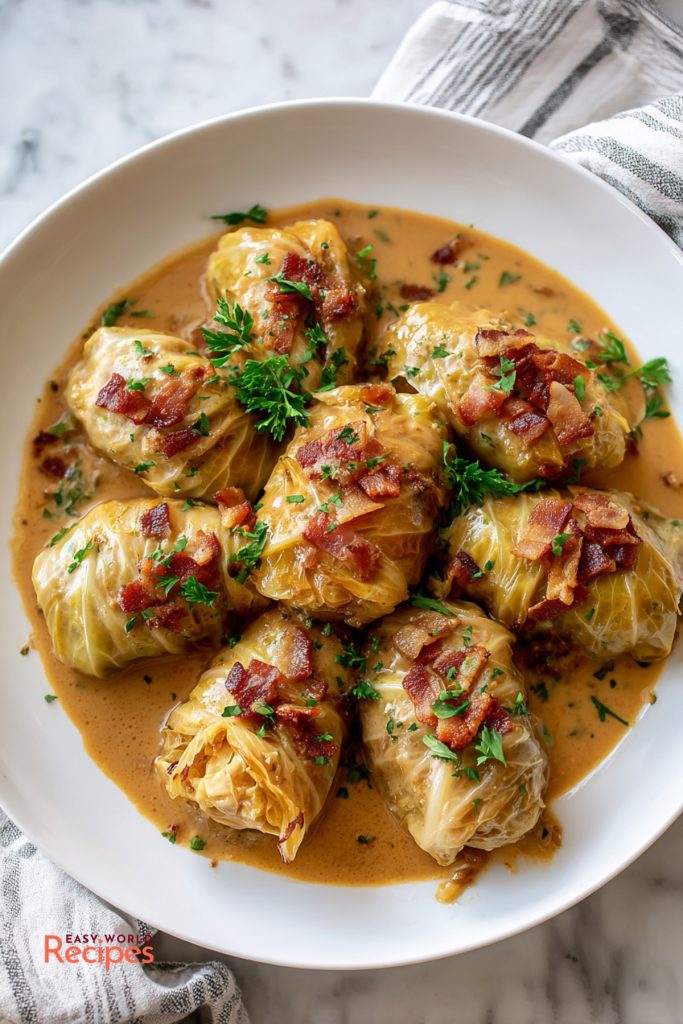
Today, I’m sharing my version of this traditional Kohlrouladen – German main course, complete with tips for rolling cabbage leaves without tearing, binding your filling just right, and that irresistible creamy broth-based sauce with bacon lardons.
What Is Kohlrouladen?
Kohlrouladen are German cabbage rolls—soft cabbage leaves stuffed with a flavorful mix of ground meat (usually beef), onion, seasonings, and a binding ingredient like soaked bread rolls or breadcrumbs. They’re browned, then gently simmered in a creamy, savory sauce, often featuring bacon and beef broth.
Also called Krautwickel, these rolls are a favorite in southern and central Germany, especially in the cooler months. You’ll find them in family kitchens, Gasthäuser, and holiday tables.
Why I Love This Recipe?
This one’s a real heart-warmer. It’s rustic, hearty, and filled with those nostalgic flavors of central Europe—sweet cabbage, savory beef, a hint of paprika, and that luscious creamy bacon sauce. But what I love most?
- It’s easier than it looks—perfect for a weeknight dinner
- It’s a one-pot stovetop meal that simmers low and slow
- The sauce is rich but not heavy, made with broth, cream, and bacon
- Leftovers taste even better the next day
- You can tweak it—gluten-free breadcrumbs, less bacon (but why?), or use soaked bread rolls for the binder
This is the kind of recipe that tastes like someone cooked it just for you—with care, love, and plenty of bacon.
Necessary Equipment
To make proper Kohlrouladen, here’s what you’ll need:
- Large pot (for blanching cabbage leaves)
- Slotted spoon or tongs
- Large skillet or Dutch oven (for browning and simmering)
- Sharp knife
- Mixing bowl (for the filling)
- Butcher’s twine or toothpicks (to secure the rolls)
- Lid for your pan (for simmering gently)
(Tip: A cast iron braiser or deep sauté pan works beautifully for this.)
Rouladen vs. Kohlrouladen?
Both are rolled and filled dishes, but Rouladen use thin slices of beef rolled with mustard, bacon, and pickles, while Kohlrouladen use cabbage leaves instead of meat for the wrapper. Both are delicious. Different vibe, same cozy comfort.
Key Ingredients & Substitutions
For the Filling:
- 500g (1.1 lb) 85% lean ground beef
- 1 small onion, finely diced
- 1 small white bread roll, soaked in water or milk and squeezed out
(Substitute: ½ cup breadcrumbs – gluten-free if needed) - 1 egg
- 1 tsp sweet paprika
- 1 tsp dried marjoram
- Salt and black pepper, to taste
For the Rolls:
- 1 large white or green cabbage
- Butcher’s twine or toothpicks, for tying
For the Sauce:
- 100g (3.5 oz) bacon lardonsor diced streaky bacon
- 250ml (1 cup) beef broth
- 150ml (⅔ cup) heavy cream
- 1 tsp cornstarch, mixed with 1 tbsp water (slurry)
- Fresh parsley, for garnish
(Tip: Don’t skip the bacon—it’s the soul of the sauce.)
Step-by-Step Instructions
1. Blanch the Cabbage Leaves
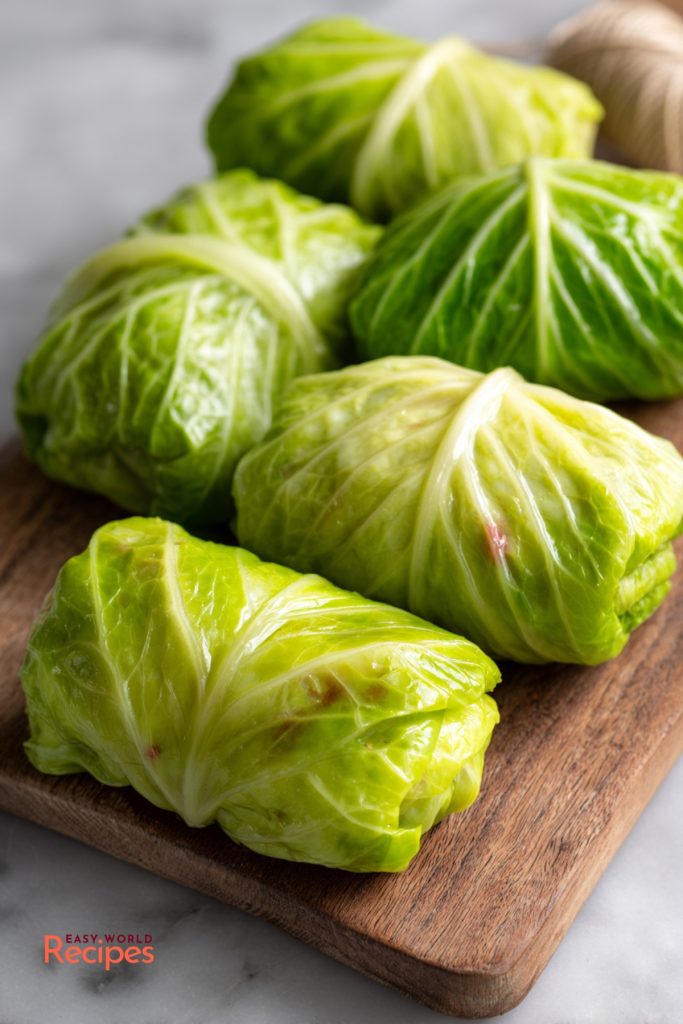
Bring a large pot of water to a boil. Carefully peel off 8–10 outer cabbage leaves, then blanch them for 2–3 minutes until pliable. Transfer to a towel-lined tray.
(Tip: Cut out the thick stem part at the base of each leaf to make rolling easier.)
2. Make the Filling
In a bowl, combine ground beef, soaked bread roll or breadcrumbs, egg, diced onion, paprika, marjoram, salt, and pepper. Mix until just combined—don’t overwork it.
(Tip: The mixture should be moist but hold its shape when rolled.)
3. Fill and Roll the Cabbage
Place about 2 heaping tablespoons of filling near the base of each cabbage leaf. Fold sides over the filling and roll tightly into a log. Secure with butcher’s twine or toothpicks.
(Tip: Tuck in the sides like a burrito for a tight roll that won’t open during cooking.)
4. Brown the Rolls with Bacon
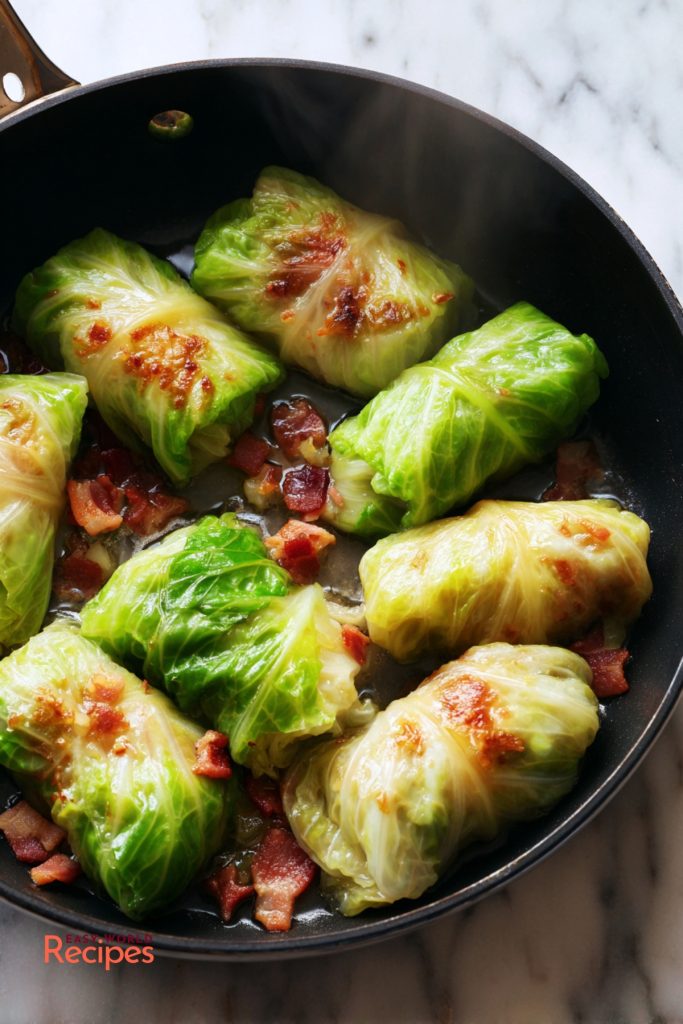
In a large skillet or Dutch oven, cook bacon until lightly crisp. Remove and set aside, leaving the fat in the pan. Add the cabbage rolls and brown on all sides over medium heat, working in batches if needed.
(Tip: This adds so much flavor—don’t skip the browning step!)
5. Simmer and Sauce
Return all rolls and bacon to the pan. Pour in the beef broth, cover, and simmer gently for 30 minutes. Remove lid, stir in cream, and simmer 10 minutes more. Thicken with cornstarch slurry if desired. Adjust seasoning.
(Tip: Let the sauce bubble gently so it doesn’t curdle.)
Tips for the Best Kohlrouladen
- Use soft cabbage leaves—blanch just until flexible to avoid tearing.
- Cut out the thick stem for easier rolling and no tearing.
- Don’t overmix the filling—it’ll get tough. Just combine until even.
- Browning the rolls boosts flavor and gives a beautiful color.
- Want it lighter? Swap cream for milk and bacon for smoked turkey.
- For gluten-free? Use certified GF breadcrumbs or cooked rice.
- Double the sauce if serving with Spätzle—it’s so good, people will want more.
Serving Suggestions
These German cabbage rolls are hearty on their own, but shine even brighter with:
- Mashed potatoes – classic combo that soaks up all that creamy sauce
- Spätzle – traditional German egg noodles (perfect for the sauce!)
- Boiled new potatoes – buttery and simple
- Braised red cabbage or carrot salad – for color and freshness
- German beer or red wine – to complete the meal
Make-Ahead & Storage
Make-Ahead Tips:
- Roll and prep the cabbage rolls up to 1 day in advance. Store covered in the fridge.
- You can also make the entire dish a day ahead—it reheats beautifully and may taste even better.
Storing Leftovers:
- Store cooled rolls in an airtight container in the fridge for up to 3–4 days.
- Reheat gently on the stove or in the oven with a splash of broth or cream to loosen the sauce.
Freezing:
- Freeze individual cooked rolls with sauce in containers for up to 2 months.
- Thaw overnight in the fridge, then reheat slowly on the stovetop.
(Tip: Don’t freeze raw rolls—the cabbage tends to get watery when thawed.)
Common Mistakes
- Rolling with stiff cabbage leaves – they’ll tear! Always blanch first.
- Overfilling the leaves – makes them hard to roll and secure.
- Skipping the browning step – you’ll miss out on flavor and texture.
- Too much cream too fast – add slowly and simmer gently to avoid splitting.
- Not tying rolls securely – they’ll unravel as they simmer.

FAQ
Can I make Kohlrouladen gluten-free?
Yes! Use gluten-free breadcrumbs or cooked rice instead of the soaked bread roll.
Can I freeze cabbage rolls?
Absolutely. Freeze cooked cabbage rolls with sauce in airtight containers for up to 2 months. Reheat gently on the stove.
What’s the difference between Rouladen and Kohlrouladen?
Rouladen uses thin beef slices as the wrapper; Kohlrouladen uses cabbage leaves. Both are rolled and filled with savory ingredients.
Have You Tried Kohlrouladen?
Let me know in the comments—what do you serve yours with? Mashed potatoes, Spätzle, or a side of red cabbage? I’d love to hear your take on this German family favorite!