
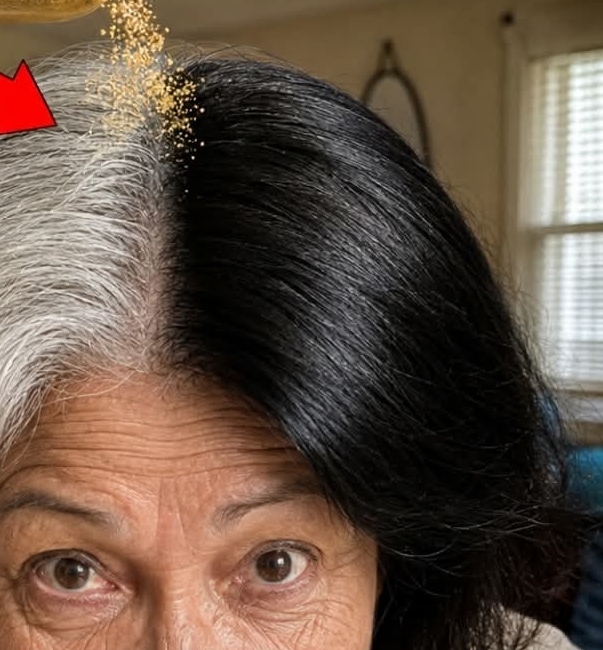
Vitamin B12 does more than help your body make red blood cells. When it drops too low, the tiny color-making factories inside each hair follicle start sputtering, and gray strands can move in fast like a power grid losing voltage.
That’s the promise behind the post: gray hair after 60, not a dye, not a cover-up, but a nutrient problem hiding in plain sight. And once you see the mechanism, the whole thing stops looking like “just aging” and starts looking like a system that’s been starved.
By the time a lot of people notice the silver creeping in, the change has already been working underground for months. The mirror catches the final result, but the real damage is happening deeper down, where follicles are trying to keep pigment alive with too little raw biological fuel.
So the question isn’t, “Why is my hair turning gray?” The sharper question is, “What is my body missing that makes color production shut down?”
What the supplement aisle rarely shouts is that B12 sits at the center of a chain reaction. It helps your body build healthy red blood cells, and those cells are the delivery trucks carrying oxygen and material to tissues that need constant repair, including the scalp.
Think of a busy factory floor with the lights dimming and the supply trucks backing up at the gate. The machines don’t explode; they slow, then stutter, then start turning out weaker and weaker output. Hair pigment works the same way when the system is underfed.
The ugliest truth in health: the cheapest fix gets the least airtime. Nobody built a glossy ad campaign around a vitamin that can’t be branded into a miracle bottle, but that doesn’t change what happens when the body runs low.
The first thing people notice is not always the hair itself. It’s the tired, flat feeling that makes mornings heavier, the kind of exhaustion that makes you stare at the sink and wonder why everything feels harder than it should.
Then the scalp starts telling its own story. Hair loses its depth, the silver spreads, and what used to look rich and dark begins looking washed out, as if the color were being drained drop by drop.
Why men feel the shift first: many men see it as a harsh line across the temples, where the change looks sudden under bright bathroom light. It’s like watching the black ink in a pen run dry halfway through a signature.
For men, that can feel brutal because the hairline is often the first place the change becomes impossible to ignore. One morning the sideburns look frosted, and the face in the mirror suddenly seems older than it did last season.
Why women notice it in a different way: the change often shows up as a wider part, scattered silver at the crown, or a loss of richness that makes the whole head look tired. It’s less like a single alarm and more like a curtain slowly losing color in the sunlight.
That is where B12 becomes more than a vitamin. It acts like a signal that tells the body to stop running on fumes and start rebuilding the internal chain that feeds pigment-producing cells.
Over time, the pattern gets clearer: when the body has enough of this raw material, the scalp stops acting like a neglected rooftop and starts acting like a maintained garden again. Water reaches the roots, the soil stops baking dry, and the plants don’t have to fight for every inch of life.
The problem is that modern life is a sabotage machine. The food supply is overloaded with empty calories, digestion gets sluggish, and the body can pass through years of low-grade shortage without screaming until the signs are already visible in the hair, the energy, and the skin.
That’s why the gray hair conversation is really a bigger conversation about the whole system. Hair is just the loudest place where the shortage shows up first.
Why the scalp changes before most people connect the dots: follicles are greedy little structures. They demand constant delivery, and when that delivery slows, pigment production is one of the first luxury functions to get cut.
Picture a restaurant kitchen where the gas flame keeps dipping. The chef can still move, the pans can still sizzle, but the dishes come out weaker, duller, and less complete. That is what underfed follicles look like from the inside.
And that is why the post hits such a nerve. Gray hair after 60 is often treated like a cosmetic issue, when in many cases it is the visible flag of a deeper shortage that the body has been tolerating in silence.
The hidden lever is not dye. It is the supply line. Restore the line, and the body has a chance to do what it was built to do in the first place: keep pigment machinery alive instead of letting it fade into shutdown mode.
One common kitchen habit can wreck that process before it even gets a fair shot: blasting your body with junk food and then expecting a single nutrient to do all the rescue work. A vitamin cannot outmuscle a diet that keeps starving the system.
There’s also a pairing secret most people miss entirely: the body works better when the right pieces show up together, not as lone heroes. That next layer is where the real color support gets interesting.
This article is for informational purposes only and does not replace professional medical advice. Please consult your healthcare provider for personalized guidance.