
A Glimpse Into the Past
Before sewing machines and factory-made lace became common, skilled artisans spent countless hours weaving delicate lace by hand. Wooden bobbins held individual threads, allowing lace makers to twist, cross, and weave dozens—sometimes hundreds—of threads into intricate patterns.
Each bobbin was carefully carved from hardwood, making it lightweight, smooth, and comfortable to handle during long hours of work.
How Were They Used?
A lace maker would wind fine thread around each bobbin and arrange many of them on a special lace pillow. By crossing and twisting pairs of bobbins over pins placed in a pattern, stunning lace designs slowly emerged.
Creating even a small piece of lace required incredible patience, precision, and practice.
Why Are They Split?
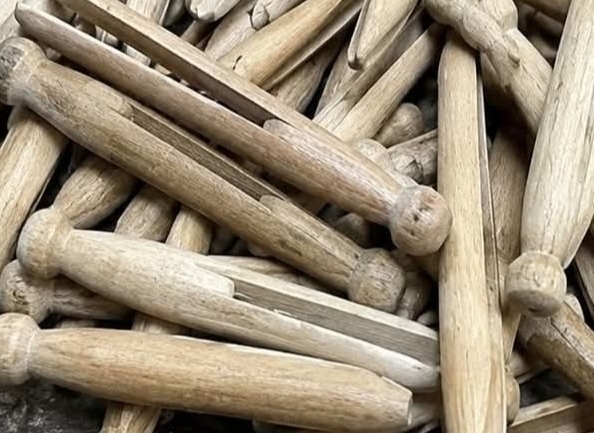
If you look closely, you’ll notice that each wooden piece has a narrow slit running along one end. This clever design allowed the thread to be tucked securely into the slit, preventing it from unraveling while the lace maker worked.
The rounded end also made the bobbin easy to hold and manipulate quickly.
Why Are They Found in Old Homes?
These bobbins were commonly used from the 18th to the early 20th century. As handmade lace became less common, many families packed their lace-making supplies away in drawers, sewing boxes, and attics.
Today, people often rediscover them while cleaning out a grandparent’s house, wondering what these mysterious wooden objects were originally made for.
Are They Valuable?
Most vintage lace bobbins are affordable collectibles, but antique examples with decorative carvings, inscriptions, painted designs, or rare origins can be worth much more to collectors.
Even when they have little monetary value, they represent an important piece of textile history and traditional craftsmanship.
A Small Tool With a Big Story
These simple wooden bobbins remind us of a time when clothing and decorations were made entirely by hand. Every piece of lace represented hours—or even days—of careful work, turning ordinary thread into delicate works of art.
The next time you come across a handful of these wooden tools, you’ll know they aren’t just old pegs—they’re a fascinating reminder of a beautiful craft that has been passed down through generations.